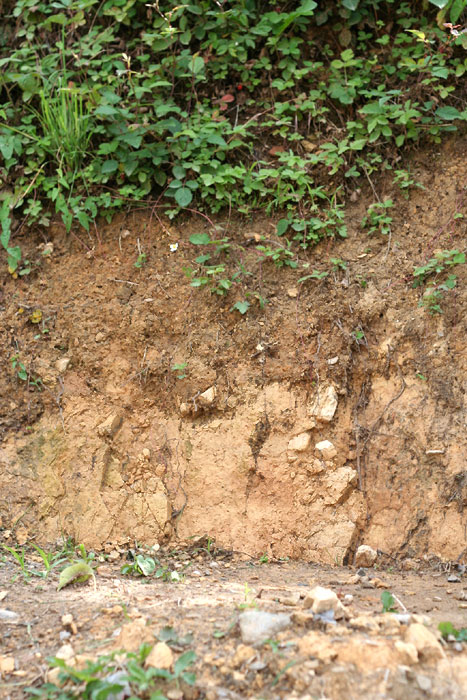
Understanding Soil Texture
Soil texture refers to the proportions of sand, silt and clay particles in a given substrate. These three mineral particle sizes differ not only in diameter but in surface area, porosity and electrochemical charge — all of which affect how water, air and nutrients move through the soil and how plant roots navigate it.
In urban environments across France, gardeners typically encounter one of two problematic extremes: dense clay soils common in the Paris Basin, Normandy and much of the north; or coarser sandy or silty soils found in river valleys, coastal zones and some suburban development sites where topsoil has been stripped.
Clay Soils: Characteristics and Challenges
Clay particles are the smallest soil mineral fraction, typically under 0.002 mm. Their flat, plate-like shape creates a high surface-area-to-volume ratio, which allows clay to hold significant quantities of water and cation nutrients such as calcium, potassium and magnesium. This is a genuine advantage — clay soils are often naturally fertile.
However, the same properties that make clay nutrient-retentive also make it prone to:
- Compaction — foot traffic or tillage when wet permanently damages soil structure by collapsing pore space
- Waterlogging — drainage slows dramatically in heavy clay, leading to anaerobic conditions at root depth
- Surface crusting — when clay dries after rain, it forms a hard surface crust that reduces water infiltration on the next rainfall
- Shrink-swell cycles — repeated wetting and drying causes visible cracking in summer, which can sever fine roots
Working clay soil when it is wet is the most common cause of structural damage in urban plots. A simple test: take a handful of moist soil and roll it between your palms. If it forms a smooth, sticky ribbon over 5 cm long, the clay content is high enough to cause compaction problems if disturbed.
Sandy Soils: Characteristics and Challenges
Sand particles are the largest mineral fraction, ranging from 0.05 mm to 2 mm. Large particle size means large pore spaces between particles, which creates good aeration and drainage. Roots generally find sandy soils easy to penetrate.
The disadvantages are the inverse of clay's advantages:
- Low water retention — water moves through quickly, requiring more frequent irrigation during dry periods
- Low nutrient retention — cation exchange capacity is very low; nutrients applied in mineral fertilisers leach rapidly with irrigation or rain
- Temperature sensitivity — sandy soils warm and cool faster than clay, which can be advantageous in spring but stressful for established plants in midsummer
Organic Matter: The Universal Amendment
For both clay and sandy soils, the practical amendment of choice in urban gardening is well-decomposed organic matter — mature compost, aged manure or leaf mould. Organic matter functions differently in each soil type:
| Soil Type | How Organic Matter Helps | Recommended Rate |
|---|---|---|
| Clay | Improves aggregate structure, opens drainage pores, reduces compaction risk | 3–5 cm layer dug in or surface-applied annually |
| Sandy | Increases water retention, raises cation exchange capacity, feeds soil biology | 5–8 cm layer annually until organic matter levels stabilise |
In clay soils, organic matter acts as a physical spacer between clay platelets, creating aggregates with larger pore networks. Humic acids in compost also bond to clay surfaces, helping to stabilise aggregates against collapse when wet. The Soil Association's guidance on clay soil management (publicly available) recommends surface mulching over digging as the preferred incorporation method, because tillage on clay disrupts the structure being built.
Specific Amendments for Clay
Beyond compost, several other materials assist with clay management in urban plots:
- Grit or coarse horticultural sand — effective at improving drainage when applied in volumes sufficient to change soil texture (typically 30–50% of total volume in a raised bed). Adding small quantities of sand to clay without achieving this threshold can produce a concrete-like result.
- Biochar — a charcoal-like material produced by slow combustion of organic matter without oxygen. Research published by INRAE indicates that biochar additions can improve soil porosity and microbial activity in heavy soils. It is available commercially in France, though prices vary considerably.
- Lime — calcium carbonate encourages clay particles to flocculate (cluster together), improving structure. Useful on acid clay soils but unnecessary and potentially harmful where pH is already above 7.0.
Specific Amendments for Sandy Soil
- Coir or peat alternatives — coir fibre from coconut husks holds moisture while resisting compaction. It is particularly useful in container mixes for sandy-substrate gardens. Peat was historically used for the same purpose but is now restricted under French and EU environmental guidance due to peatland conservation concerns.
- Clay-rich subsoil — where sandy topsoil overlies a clay subsoil at manageable depth, deep tillage to blend the layers (known as subsoil incorporation) can permanently improve texture. This is a one-time operation not suited to raised beds.
- Biosolids compost — composted sewage sludge from municipal treatment plants is available in some French regions under the name compost de boues. It is regulated under French law (arrêté du 8 janvier 1998) and when certified, is a legal and effective soil builder for food gardens.
Raised Beds as a Practical Solution
For many urban growers, the most effective response to poor native soil — whether clay or sand — is to build raised beds filled with a prepared growing medium. A standard mix used in French urban agriculture projects, based on guidance from ADEME's urban agriculture resources, typically combines:
- 50–60% topsoil (sourced locally, avoiding contaminated urban fill)
- 30–40% mature compost
- 10–15% coarse horticultural sand or perlite
Raised beds also allow growers to manage soil pH, drainage and organic matter levels independently of whatever substrate lies beneath. For beds deeper than 30 cm, the base layer can consist of coarser material — wood chip, rough compost or gravel — to improve drainage without the cost of filling the entire depth with premium growing medium.
pH and Its Interaction with Soil Type
Clay soils in the Paris Basin and northern France tend toward neutral to slightly alkaline pH (7.0–7.5) due to the calcareous parent rock common in the region. Sandy soils in Bretagne and the Atlantic coast lean acid. Most vegetables grow well between pH 6.0 and 7.0. Measuring soil pH before applying amendments avoids the common error of adding lime to already-alkaline soil, which can lock up iron and manganese for plants.
Inexpensive pH test kits are widely available in French garden centres. INRAE's publicly available agronomy guides describe the relationship between pH and nutrient availability in detail for growers who wish to go deeper into the chemistry.
Practical Summary
The table below summarises the core recommendations for each soil type:
| Challenge | Clay Soil | Sandy Soil |
|---|---|---|
| Primary amendment | Mature compost (surface mulch) | Mature compost (dug in) |
| Drainage | Raised beds, avoid tillage when wet | Not a problem; may need to retain moisture |
| Compaction risk | High — use permanent beds and no-dig | Low |
| Nutrient retention | Good — moderate fertilisation needed | Poor — split applications, organic feeds |
| pH tendency | Neutral to alkaline (N France) | Acid (Atlantic coast) |
Last updated: May 16, 2026. For regional soil maps of France, see the GIS Sol national soil information system maintained by INRAE and the French Ministry of Agriculture.